
Twin engines mean redundancy. One fails, you can still fly. That’s the theory anyway. In practice, single-engine performance varies wildly between aircraft.
Why Twins
Safety margin. Lose an engine, you don’t immediately become a glider. Plus more power overall, usually better speed and climb performance.
The tradeoff: more complexity, more maintenance, more fuel burn, higher insurance.
Some Standouts
Beechcraft Baron – classic piston twin. Solid performer, good handling, been around forever. Popular for personal and training use.
Piper Seneca – more affordable than the Baron, decent performer. Common for multi-engine training.
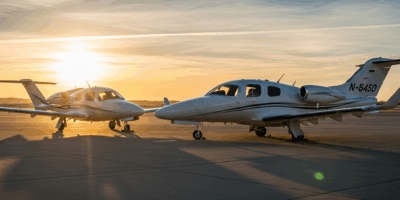
Diamond DA62 – newer design with diesel engines. Impressive efficiency, modern avionics. Pricey though.
King Air 350 – turboprop, serious aircraft. Business travel, air ambulance, versatile. Not cheap to operate but incredibly capable.
Turboprops vs Pistons
Turboprops give you jet-like reliability with prop efficiency. Faster, higher altitude capability, smoother operation. Also way more expensive to buy and maintain.
Piston twins are more accessible price-wise but the operating costs still add up.
The Training Requirement
Multi-engine rating takes additional training beyond single-engine. Learning to manage asymmetric thrust when one engine fails is critical. Some pilots never get fully comfortable with it.
Who Actually Flies These
Business travelers who need the speed and range. Charter operators. Flight schools teaching multi-engine. People who want the safety margin and can afford it.


Stay in the loop
Get the latest aviation data updates delivered to your inbox.