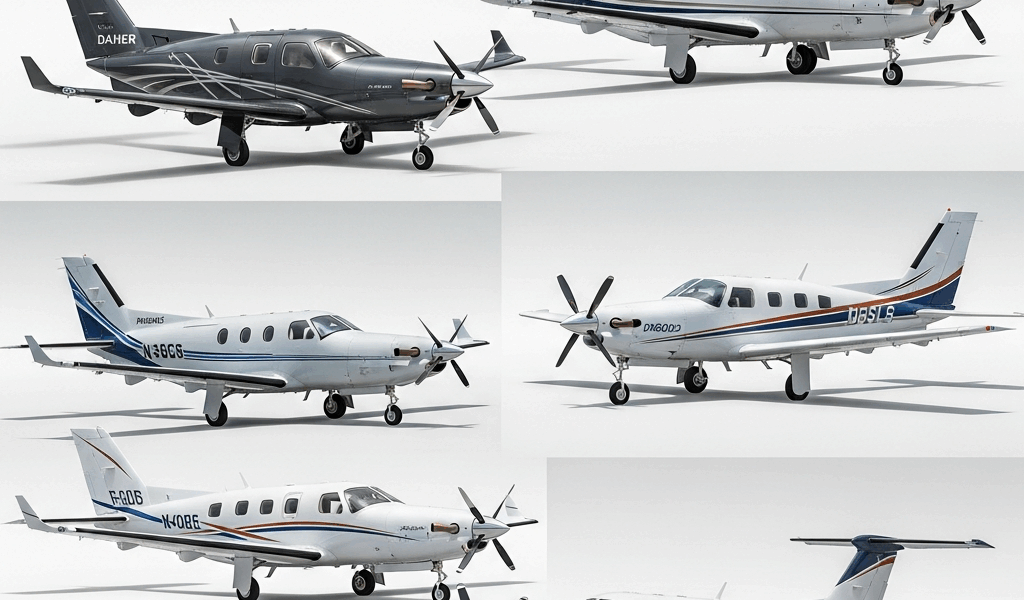
Best Single-Engine Turboprop Aircraft in 2026 — 5 Models Compared
The best single-engine turboprop in 2026 depends almost entirely on what you’re actually doing with it. That sounds obvious, but I’ve watched buyers spend $4 million on a TBM 960 when a $2.3 million Kodiak 100 would have served their mission better — and I’ve seen the reverse mistake just as often. I spent several years working alongside a regional charter operation that ran both piston singles and turboprops on the same routes, and the financial and operational gap between those categories taught me more about aircraft selection than any trade publication ever did. This comparison covers five specific models, with real numbers, real tradeoffs, and clear recommendations tied to mission type.
Why Turboprops Still Make Sense in 2026
Turbine engines in general get lumped together in casual conversation — “jets and turboprops” — as if they occupy the same market space. They don’t. A single-engine turboprop occupies a very particular niche that neither piston aircraft nor light jets can fully replicate, and in 2026 that niche is arguably stronger than it’s been in fifteen years.
Fuel efficiency is the first argument. A Pilatus PC-12 NGX burns roughly 59 to 65 gallons per hour of Jet-A at cruise. A comparable light jet — say, a Cirrus Vision Jet — burns around 55 to 60 GPH, but with higher fixed costs, more complex maintenance schedules, and significantly reduced short-field capability. The fuel burn difference between a turboprop and a jet is narrower than most people assume. What isn’t narrow is the difference in operating environment.
Short-field performance is where turboprops genuinely separate themselves. The Daher Kodiak 100 can operate from runways as short as 1,060 feet at sea level, maximum gross weight, standard conditions. No light jet touches that number. The PC-12 handles 2,500-foot strips routinely. For buyers operating into grass strips, mountain airports, or remote humanitarian destinations, that capability isn’t a selling point in a brochure — it’s the entire reason to buy the airplane.
Operating costs tell a more complicated story, but turboprops generally win on an annual fixed-cost basis against comparable jets. Engine overhaul intervals on modern turboprops have stretched significantly. The Pratt & Whitney Canada PT6A family — which powers three of the five aircraft in this comparison — has an on-condition maintenance philosophy that allows operators to run well past TBO if inspections support it. That changes the financial math considerably.
There’s also the single-pilot IFR question. All five aircraft compared here are certifiable and routinely flown single-pilot under IFR. That matters for the owner-operator who doesn’t want to pay for a second-in-command seat on every flight. Light jets have the same certification, but the turboprop’s generally more forgiving low-speed handling makes single-pilot ops feel less like a high-wire act, especially in IMC approaches into unfamiliar airports.
One more thing worth saying plainly: turboprops are simpler. Fewer moving parts than a turbofan. The PT6A has been in production in various forms since 1963. The maintenance infrastructure is global and deeply mature. Try finding a qualified Citation Mustang mechanic at a rural airstrip in Montana. Then try finding someone who knows a PT6A. It’s not a close comparison.
5 Best Single-Engine Turboprops Compared
TBM 960 — The High-Performance Personal Transport
The TBM 960 is the fastest single-engine turboprop in production. Full stop. Its Pratt & Whitney Canada PT6E-66XT produces 1,825 shaft horsepower, and the airframe is certified to 330 KTAS at FL310. That puts it in direct conversation with entry-level jets on speed grounds alone — the gap is genuinely small at cruise altitude.
Base price in 2026 runs approximately $4.7 million for a new aircraft, though equipped examples frequently land between $5.1 and $5.4 million depending on avionics packages. The Garmin G3000 integrated flight deck is standard, and the 2026 model year added revised active-side stick integration with updated envelope protection logic. Useful load is approximately 1,627 pounds, giving you realistic range with four adults and bags of about 1,700 nautical miles. Fuel burn at high-speed cruise is around 63 GPH.
The TBM 960 is purpose-built for the owner-pilot who wants to cover distance quickly, alone or with one or two passengers, and who has the budget to maintain a high-performance pressurized single with the associated training requirements. It is not a cargo airplane. It is not a bush airplane. It is a very fast, very refined personal transport with a cabin that fits four adults reasonably well and six adults uncomfortably.
Pilatus PC-12 NGX — The Swiss Army Knife
Probably should have opened with this section, honestly. The PC-12 NGX is the most versatile single-engine turboprop ever built, and its sales numbers have proven that claim across 30-plus years of continuous production. Pilatus delivered over 1,900 PC-12s through the end of 2025. No competitor is close.
The NGX variant, introduced in 2021 and carrying through 2026 with incremental updates, runs a PT6E-67XP engine producing 1,200 shaft horsepower. Cruise speed is around 290 KTAS at FL250. That’s slower than the TBM, but the PC-12 compensates with a cabin that is genuinely large — 16.3 feet long, 5 feet wide, 4.8 feet tall. You can configure it as a six- to nine-passenger transport, a dedicated cargo aircraft with a 52-by-52-inch cargo door, a medevac platform, or a combination of all three with quick-change interior systems. New base price in 2026 is approximately $5.6 million, though fully equipped examples with Pilatus’ ProLine Fusion avionics package clear $6 million.
Fuel burn is around 59 to 65 GPH depending on altitude and power setting. The PC-12 operates from 2,500-foot runways routinely and has a maximum gross weight of 10,450 pounds. The airframe is pressurized, certified for FIKI (flight into known icing), and approved for single-pilot IFR globally.
The weaknesses are real. Ground handling is deliberate given the aircraft’s size, and high-altitude hot-and-high performance is measurably inferior to the TBM. The avionics, while excellent, don’t quite match the Garmin ecosystem’s current generation in terms of integration depth. But for sheer flexibility of mission, nothing beats it.
Daher Kodiak 100 Series III — The Bush and Utility Specialist
Inspired by the backcountry operators who needed more than a Cessna 206 could offer, the Kodiak 100 was designed from the start as a utility aircraft that could take serious punishment from unimproved strips. The Series III, current as of 2026, maintains that identity with a PT6A-34 producing 750 shaft horsepower and an airframe that looks almost agricultural compared to the TBM.
It’s supposed to look that way. The fixed landing gear with tundra-capable options, the large rectangular cabin door, the enormous cargo capacity — all of it is intentional. Useful load tops 2,100 pounds in some configurations. That’s more useful load than the TBM 960 by roughly 500 pounds, in an aircraft that costs about $2.3 million new.
Cruise speed is only 183 KTAS. Range with reserves is approximately 1,100 nautical miles. Those numbers sound modest until you realize that the Kodiak’s operators frequently don’t need 330-knot cruise — they need to carry a stretcher patient, 400 pounds of cargo, and a nurse into a 900-foot gravel strip in Alaska without destroying the landing gear. The Kodiak does that. Nothing else on this list does.
Fuel burn is approximately 34 to 38 GPH, which makes it the most economical aircraft in this comparison on a per-hour basis by a significant margin. The cabin seats nine in a pinch and the 750 HP PT6A-34 has a 3,600-hour TBO — among the highest in the PT6 family.
Cessna Grand Caravan EX — The Workhorse
The Cessna Grand Caravan EX has been in continuous production since 1984 in various forms, and in 2026 it remains the volume leader in the utility turboprop segment by a considerable margin. Over 2,800 Caravans of all variants have been delivered. The EX suffix indicates the PT6A-140 engine producing 867 shaft horsepower, introduced to the Caravan line in 2012 and carried forward with progressive refinements.
New price for a Grand Caravan EX in 2026 sits around $2.4 million, making it directly competitive with the Kodiak on price. Useful load is approximately 3,583 pounds — significantly higher than any other aircraft on this list. That number is the headline for cargo operators, skydiving operations, and regional feeder carriers. The Caravan was, in some configurations, never meant to be pretty. It was meant to carry a lot of things a long way at a reasonable cost, and it does exactly that.
Cruise speed is around 175 KTAS. Fuel burn at cruise is approximately 59 to 65 GPH. Range with standard fuel is around 900 nautical miles. The Garmin G1000 NXi is standard equipment in 2026 production aircraft. The floatplane conversion (the Caravan C208 Amphibian variant) remains one of the most commercially successful float aircraft in the world, largely because operators trust the airframe’s durability over long operational lives.
The honest criticism — and I learned this from spending time with a skydiving operation that ran two of them — is that the Caravan’s avionics integration and overall pilot experience feel dated compared to the PC-12 or TBM. The airframe is old. The design philosophy prioritizes load-carrying utility over pilot ergonomics or passenger comfort. That’s a feature if you’re hauling cargo. It’s a liability if you’re selling charter seats to paying passengers who can see the carpet.
Piper M600/SLS — The Owner-Flown Value Proposition
The Piper M600/SLS (Safe Return Emergency Autoland system) entered the market as a genuine differentiator in single-pilot safety, and in 2026 it continues to hold that position as the most affordable pressurized single-engine turboprop in production with an emergency autoland system as standard equipment. The Garmin Autoland integration — branded “Safe Return” — allows the aircraft to autonomously navigate, descend, land, and stop at a suitable airport if the pilot becomes incapacitated. That capability matters to owner-operators flying single-pilot IFR over terrain where options are limited.
The M600/SLS runs a Lycoming LTP101-700 producing 600 shaft horsepower. Cruise speed is approximately 274 KTAS at FL280. Range with four occupants is around 1,484 nautical miles. New base price in 2026 is approximately $3.7 million, making it the middle-market option between the Kodiak’s utility focus and the TBM’s performance focus.
Useful load is around 1,304 pounds — the lowest of the five aircraft here. The cabin fits six occupants but feels tighter than the PC-12. These are real constraints. The M600 is not the right airplane for heavy cargo or maximum passenger count. It is the right airplane for the owner-pilot who flies 150 to 200 hours per year, typically two to four passengers, wants pressurization and real IFR capability, and has meaningful concern about single-pilot incapacitation risk. For that specific buyer profile, the Safe Return system isn’t a gimmick — it’s a rational safety investment.
Operating Cost Comparison
Numbers below are 2026 estimates based on published manufacturer data, AOPA operating cost surveys, and the Conklin & de Decker Aircraft Cost Evaluator database. All figures assume 400 annual flight hours, which is a reasonable owner-operator baseline.
| Aircraft | Fuel Burn (GPH) | Variable Cost/Hr | Annual Fixed Costs | Total Cost/Hr (400 hrs) |
|---|---|---|---|---|
| TBM 960 | 63 | $820 | $185,000 | $1,280 |
| PC-12 NGX | 62 | $790 | $178,000 | $1,235 |
| Kodiak 100 | 36 | $480 | $112,000 | $760 |
| Grand Caravan EX | 62 | $640 | $108,000 | $910 |
| Piper M600/SLS | 51 | $660 | $140,000 | $1,010 |
Variable costs include fuel at $6.80/gallon Jet-A (2026 average), routine maintenance, reserves for engine overhaul, and landing fees. Fixed costs include insurance, hangar, training (one recurrent per year), and subscriptions. These numbers are directionally accurate, not guaranteed — your specific operation, location, and insurance history will move these figures materially.
The Kodiak’s cost advantage is dramatic and worth emphasizing. At 400 hours per year, the Kodiak costs roughly $304,000 annually all-in versus the TBM’s $512,000. That $208,000 annual delta is real money. The question is whether the TBM’s 147-knot speed advantage turns that delta into value — and for many owner-operators, it genuinely does, because time has a cost too.
One mistake I made early in my analysis work was treating fuel cost as the dominant variable in turboprop operating economics. It’s not. Engine reserve accrual and insurance are the two variables that most consistently surprise owners. A PT6A overhaul on the PC-12 runs approximately $400,000 to $500,000 at a major overhaul shop. Accruing that over 3,600 hours means $111 to $139 per flight hour just for engine reserve. Budget accordingly.
Which Turboprop Fits Your Mission
Personal Transport — High Speed, Long Range
Buy the TBM 960. Nothing else in this category matches it for speed and range in the single-engine turboprop class. If your typical mission involves two to three passengers, legs of 700 to 1,200 nautical miles, and airports with reasonable runway length (3,000 feet or better), the TBM’s PT6E-66XT and 330-knot cruise make every other option look slow. The higher acquisition cost and operating cost are real, but the aircraft delivers genuine jet-adjacent performance.
The caveat is training currency. The TBM 960’s performance envelope demands respect and regular recurrent training at a TBM-approved simulator facility. FlightSafety International in Wichita runs the dominant TBM type training program. Budget $8,000 to $12,000 per year for recurrent training and take it seriously.
Multi-Mission Flexibility — Charter, Corporate, Occasional Cargo
The PC-12 NGX is the answer, and it has been the answer to this question for thirty years. Its ability to reconfigure from nine-passenger transport to pure cargo to air ambulance with the same airframe and the same pilot type rating




Stay in the loop
Get the latest aviation data updates delivered to your inbox.