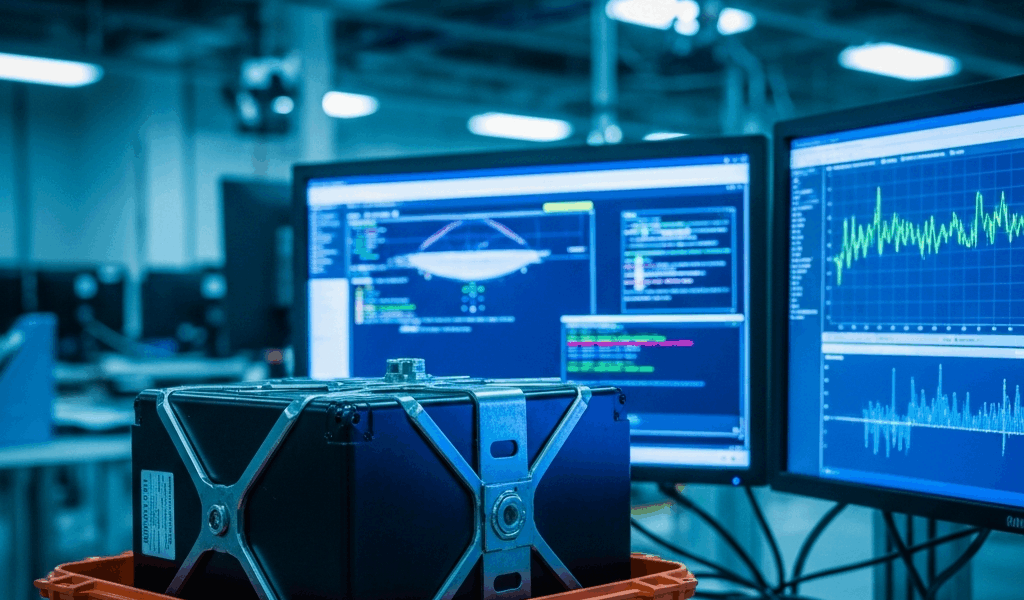
What Happens to Flight Data After Every Flight
Flight data has gotten complicated with all the misinformation flying around about black boxes and crash investigations. Most people picture some dramatic scene where investigators crack open a charred recorder. The reality is far more interesting — and it starts the moment wheels touch tarmac, not after something goes wrong.
That Boeing 777 you just deplaned from? It collected more data during a three-hour flight than most mid-sized companies process in a month. Every byte matters. Not in a vague, marketing-brochure way — in a “this specific number prevents engine failures” way.
25,000 Sensors Per Aircraft
Start with the hardware. An Airbus A380 carries approximately 25,000 sensors distributed across the airframe. That number still blows my mind, honestly, even after years of working with these datasets. I remember the first time I saw a complete sensor manifest for a widebody aircraft — I printed it out. Forty-three pages. Single-spaced.
These aren’t simple on/off switches. Precision instruments, all of them, measuring everything happening inside and outside the aircraft in real time.
Engine Data — The Crown Jewel
Each engine on a large commercial aircraft produces approximately 5,000 data points per second. Not per minute. Per second. On a four-engine A380, that’s 20,000 data points flowing every single second just from the powerplants.
What gets measured:
- Engine exhaust gas temperature (EGT) readings accurate to tenths of a degree Celsius
- Turbine vibration frequencies that can detect blade anomalies before they fail
- Fuel flow rates down to individual fuel manifold sections
- Oil pressure and temperature in main and scavenge systems
- Fan and compressor rotation speeds — N1, N2, N3 on some engines
- Bleed air pressure and temperature
A hairline crack in a turbine blade vibrates at a specific frequency. A worn fuel injector changes combustion temperatures in measurable ways. Bearing degradation produces vibration signatures weeks before anything breaks.
Structural and Environmental Sensors
Probably should have opened with this section, honestly. Beyond the engines, aircraft carry sensors monitoring structural stress, aerodynamic behavior, and cabin conditions. The landing gear has accelerometers measuring shock loads on every single touchdown. The wings carry strain gauges detecting fatigue accumulation with each pressurization cycle.
Pitot tubes, angle-of-attack sensors, air-data probes — all feeding continuous information about how the aircraft is actually flying. Cabin environmental systems log pressure altitude, temperature, humidity, and ventilation status. Flight control surfaces — ailerons, elevators, rudder, spoilers — each transmit their position hundreds of times per second.
A 777 in cruise produces roughly 8 terabytes of raw sensor data during a ten-hour flight. More information than the Library of Congress contains. That figure always gets people.
Quick Access Recorder Data
But what is a Quick Access Recorder? In essence, it’s the device that stores the most critical flight parameters in a survivable format. But it’s much more than that — it’s the structured, accessible layer of all that chaotic sensor output, organized specifically for post-flight analysis.
Many people still call it the “black box.” They’re actually painted bright international orange. Modern QARs retain 25 hours of continuous flight data on solid-state media surviving water immersion, fire, and impact forces exceeding 3,400 G’s. The QAR captures roughly 1,000 individual aircraft parameters at sampling rates between one and four times per second — a curated subset of all that sensor data, the essential variables analysts actually need.
How Data Gets Off the Aircraft
Here’s where the pipeline gets genuinely interesting. Getting terabytes of information from an aircraft flying at 43,000 feet to engineers on the ground requires multiple parallel systems running simultaneously. So, without further ado, let’s dive in.
ACARS — The Workhorse System
Aircraft Communications Addressing and Reporting System. ACARS. Most commercial aircraft transmit continuous messages to ground stations using VHF radio for domestic routes or satellite links for ocean crossings and remote regions. Automatic. No crew intervention required.
Monitoring software triggers ACARS to send compressed summaries of critical engine parameters every thirty minutes — or immediately when certain thresholds get exceeded. Engine exceeding normal EGT limits? ACARS reports it. Unusual vibration detected? The ground station knows before the crew does. Sometimes significantly before.
An individual ACARS message might only be a few kilobytes. Manageable even on older satellite links. Airlines pay approximately $3,000 to $5,000 annually per aircraft for ACARS data services — which tells you exactly how much they value the early warning capability.
Quick Access Recorder Download
The detailed work begins after landing. Maintenance personnel connect to the aircraft’s onboard data server using a laptop or portable terminal — typically while the aircraft is being cleaned and refueled at the gate. The QAR data transfers to a removable drive or directly to the airline’s ground server.
This isn’t instantaneous. A complete QAR download takes thirty to forty-five minutes depending on the system and connection speed. Most major airlines time these downloads to fit within the aircraft’s minimum turnaround window, so data reaches the system within an hour of landing.
The downloaded file gets validated immediately. A corrupted QAR download is a maintenance event in itself — it means replacing the entire recorder unit. Those cost $100,000 to $150,000 plus labor. Don’t make my mistake of assuming the hardware is infallible.
Satellite and Real-Time Monitoring
Modern aircraft like the Boeing 787 and Airbus A350 carry satcom systems with real-time data streaming capabilities. Intelsat, Viasat, and Inmarsat operate networks allowing continuous telemetry transmission even over oceans. I’m apparently someone who finds satellite network infrastructure genuinely exciting, and Inmarsat’s SwiftBroadband works for widebody operations while older VHF-only setups never could handle the data volumes modern aircraft generate.
Enabled by real-time streaming, predictive maintenance teams sometimes know an aircraft needs unscheduled maintenance before it even arrives at its destination. Ground technicians stage parts, request hangar slots, coordinate repairs — all before the aircraft lands. That coordination used to take hours after touchdown. Now it takes minutes before.
What Airlines Do With the Data
Downloaded flight data arrives at airline operations centers and enters what’s called the Flight Data Management system — FDM — or Flight Operational Quality Assurance program, FOQA. Different names, same fundamental purpose.
Automated Event Detection
Sophisticated algorithms immediately scan every flight for exceedances. Engine running five degrees hotter than standard during climb. Descent rate exceeding safe parameters. Unusual landing gear extension behavior. Autopilot disconnect events during approach.
These aren’t simple threshold checks. Airlines use machine learning models trained on thousands of flights to distinguish normal variation from genuine anomalies. A pilot making a slightly aggressive descent on one flight might be perfectly within normal bounds. The same descent rate by a different crew on a different aircraft type might indicate a training gap. Context matters enormously.
Delta Air Lines operates their proprietary APEX program — Airline Planning and Execution — processing roughly 200,000 flight records daily. Southwest Airlines’ equivalent system handles over 350,000 flights monthly. The scale is staggering when you actually sit with those numbers.
Predictive Maintenance
Engine manufacturers — Rolls-Royce, General Electric — embed themselves directly in this data pipeline. When an airline uploads QAR data to their FDM system, that same data automatically routes to the engine manufacturer’s health management center. Parallel streams. Simultaneous analysis.
Using dozens of parameters — oil analysis trends, vibration signatures, EGT margins, fuel flow deviation — manufacturer AI models predict component life remaining. Instead of replacing an engine based on calendar time, airlines now operate on condition-based maintenance. That single shift has saved the global aviation industry billions of dollars.
A Rolls-Royce Trent 900 engine costs approximately $30 million to $35 million. Extending engine life by 500 hours through data-driven management works out to nearly $2 million per engine in direct savings. Multiply that across thousands of engines worldwide. The math gets large fast.
Qantas operates Skywise — a collaborative system where Airbus, engine manufacturers, and suppliers access aggregated, anonymized fleet data. Individual airline data improves industry-wide engineering. That feedback loop might be the best option, as aviation safety requires collective intelligence. That is because no single airline operates enough flights to identify rare failure modes on their own.
Fuel Optimization
Every flight record contains detailed fuel consumption versus predicted burn. Comparing actual performance against the flight plan reveals opportunities — and sometimes exposes systematic inefficiencies that nobody noticed because nobody was looking at the aggregate picture.
Frustrated by unexplained fuel overruns on specific routes, American Airlines engineers dug into their flight data analysis and discovered pilots were maintaining climb rates slightly too conservative. Not dramatically. Just consistently, subtly conservative across certain routes. Retraining crews to follow optimized climb profiles saved approximately $15 million annually in fuel costs. That was from one finding.
Did the flight climb to cruise altitude faster than typical? More fuel. Higher altitude than planned? Different air density, measurably different efficiency. Stronger or weaker jet stream than forecast? All of it shows up in the data, flight by flight, route by route.
Crew Training and Performance Evaluation
This is where flight data becomes genuinely sensitive — at least if you’re the pilot whose numbers are getting reviewed. Every landing generates specific metrics: touchdown smoothness, alignment with runway centerline, descent rate, airspeed precision.
A landing that feels smooth might actually show erratic descent rates on the data record. A crew convinced they maintained perfect descent profile might show 200-foot altitude variations under precise examination. Modern training programs catch these gaps before bad habits solidify into permanent technique problems.
Most airlines have established clear policies. Minor exceedances below threshold levels get logged but not reviewed. Extreme events, repeated patterns, safety-critical anomalies get escalated to training departments or safety personnel. The goal is improvement, not punishment — at least at airlines running mature safety cultures.
Safety Investigation and Accident Prevention
When incidents occur, flight data becomes the centerpiece of investigation. What was the aircraft actually doing in those final moments? The data answers that question with precision no witness testimony can match.
But the real value of continuous flight data monitoring is prevention. Analyzing thousands of flights, airlines identify patterns that precede accidents or serious incidents. Specific combinations of aircraft configuration, weather, and crew behavior that statistically correlate with landing incidents. Engine failure modes appearing in the data weeks before catastrophic mechanical events.
This new idea — sharing those discoveries across the industry rather than treating them as proprietary findings — took off several years after FOQA programs launched and eventually evolved into the collaborative safety ecosystem enthusiasts know and rely on today. The Flight Safety Foundation, manufacturer safety bulletins, regulatory guidance — all of it emerges from flight data analysis performed by airlines, manufacturers, and investigators working together.
The pipeline runs continuously. Twenty-four hours per day, aircraft around the world land and upload their stories. Thousands of engineers, analysts, maintenance technicians, pilots examine that data looking for the pattern that could prevent the next accident.
That’s what happens to flight data. It doesn’t disappear with the aircraft. It becomes the fuel — honestly, there’s no better word for it — for the entire system that keeps modern aviation as safe as it is.



Stay in the loop
Get the latest aviation data updates delivered to your inbox.