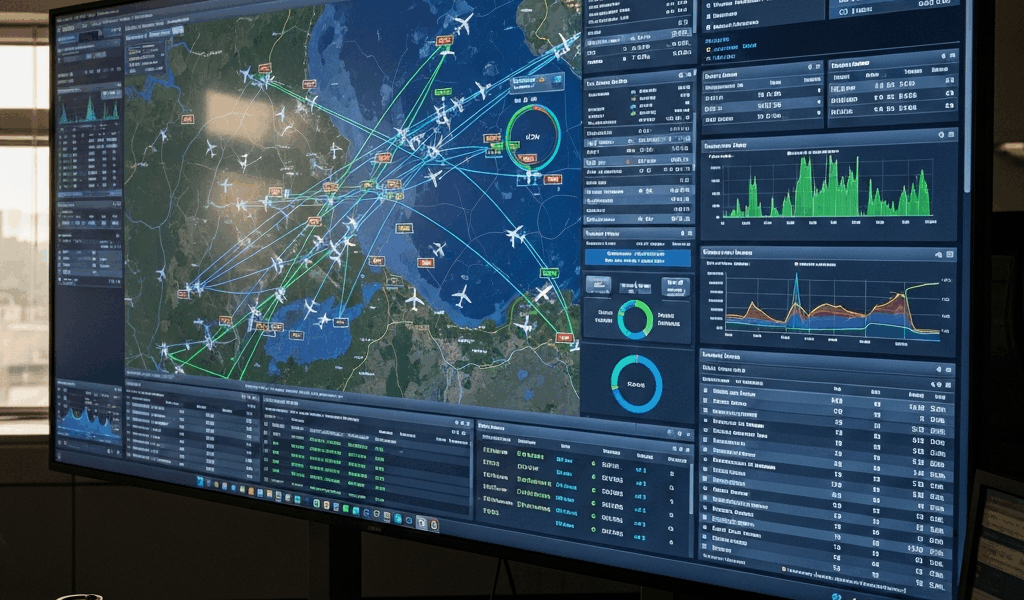
Aviation data analytics is no longer a niche discipline tucked away in airline operations departments. In 2026, the field has expanded into safety analysis, airspace optimization, predictive maintenance, and even climate research. Here’s what’s trending and where the industry is headed.
Predictive Maintenance Is Going Real-Time
Airlines have used data analytics for maintenance scheduling for years, but the shift happening now is toward real-time, in-flight analysis. Modern aircraft generate terabytes of data per flight from thousands of sensors monitoring everything from engine vibration patterns to hydraulic fluid temperature. The new generation of analytics platforms processes this data while the aircraft is still airborne.
The practical impact is significant. Instead of waiting for a plane to land, getting downloaded data, running it through analysis, and then scheduling maintenance, airlines can now have parts and technicians ready at the gate before the aircraft arrives. GE Aerospace and Rolls-Royce are both investing heavily in edge computing solutions that perform initial analysis onboard and transmit only actionable alerts via satellite link.
For smaller operators and MRO providers, cloud-based platforms from companies like Skywise (Airbus) and AnalyticX are making these capabilities accessible without building proprietary infrastructure. The barrier to entry for sophisticated maintenance analytics has dropped dramatically.
ADS-B Data Is Becoming a Research Goldmine
Automatic Dependent Surveillance-Broadcast data — the position and altitude information that aircraft continuously transmit — has become one of the richest open datasets in transportation. Networks like the OpenSky Network and ADS-B Exchange collect billions of position reports daily from receivers worldwide.
Researchers are using this data for purposes that go well beyond tracking individual flights. Environmental scientists analyze flight path data to measure actual fuel burn patterns and emissions at scale. Urban planners study approach and departure patterns to model noise exposure with far greater accuracy than the theoretical models airports traditionally use. Security researchers monitor airspace anomalies and identify patterns that might indicate unauthorized drone activity or other threats.
The data is also fueling a growing ecosystem of commercial analytics products. Companies like Cirium, FlightAware, and Radarbox aggregate ADS-B data with other sources to provide market intelligence to airlines, airports, and investors.
Machine Learning for Safety Analysis
Aviation safety has traditionally relied on investigating incidents after they happen and implementing changes to prevent recurrence. The emerging approach flips this model. Machine learning algorithms analyze flight data recordings, pilot reports, ATC communications, and maintenance logs to identify risk patterns before they result in incidents.
NASA’s Aviation Safety Reporting System has been collecting voluntary safety reports for decades. New natural language processing tools are now mining this massive text database to identify emerging risks that human analysts might miss because they’re spread across thousands of individual reports. A single report about an unusual autopilot behavior might not raise flags. But when an algorithm identifies thirty similar reports from different airlines across different aircraft types over six months, that’s a pattern worth investigating.
The Workforce Challenge
The biggest constraint on aviation data analytics isn’t technology — it’s people. The field needs professionals who understand both aviation operations and data science, and that combination is rare. A data scientist who doesn’t understand how airlines operate will build models that are technically elegant but operationally useless. A veteran airline operations manager who doesn’t speak the language of machine learning and statistics can’t leverage the tools that are now available.
Universities are starting to offer specialized programs, but the gap between supply and demand for aviation data professionals is wide and growing. For anyone with a data science background who’s interested in aviation, or an aviation professional interested in analytics, this is one of the better career opportunities in the industry right now.
What Comes Next
The integration of drone traffic data with manned aviation data is the next frontier. As commercial drone operations scale up, the data systems that track and manage them need to mesh with existing aviation data infrastructure. This is a massive coordination challenge and an equally massive opportunity for analytics platforms that can bridge both worlds.
Aviation has always been a data-rich industry. What’s changed is our ability to actually use that data at the speed and scale the industry demands.



Stay in the loop
Get the latest aviation data updates delivered to your inbox.